The Library

What Is Japandi Lighting?

Japandi lighting blends Japanese calm and Scandinavian warmth: natural materials, soft form and a warm, candle-close glow. A guide for Australian homes.

The Persimmon Tree folding screen by Sakai HoitsuBold Lighting and Unique Homewares

The Persimmon Tree. Sakai Hōitsu (Japanese, 1761-1828). Edo period. 1816. Two-panel Japanese folding screen; ink and color on paper

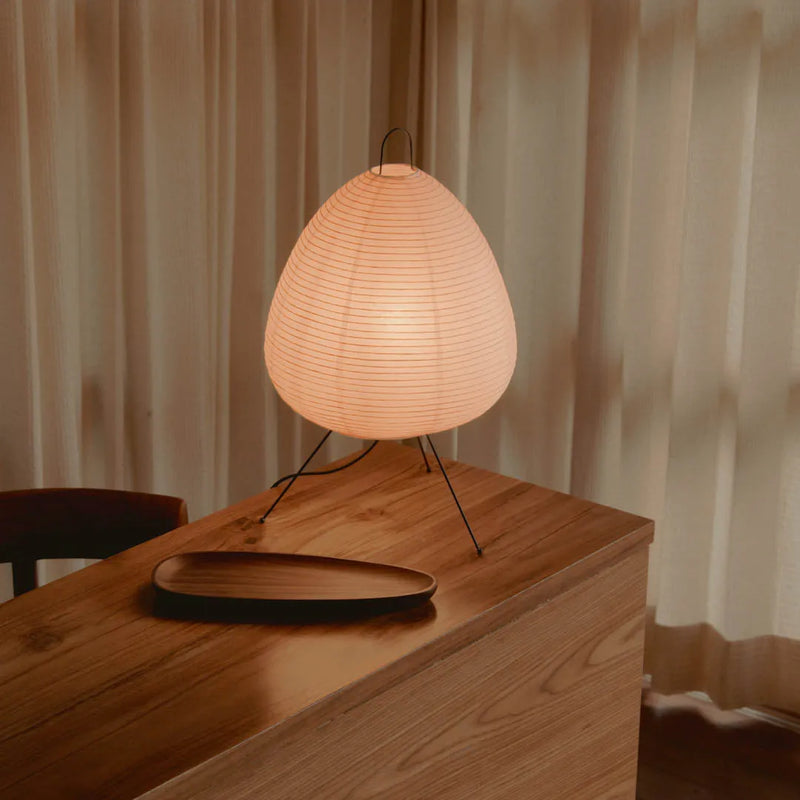
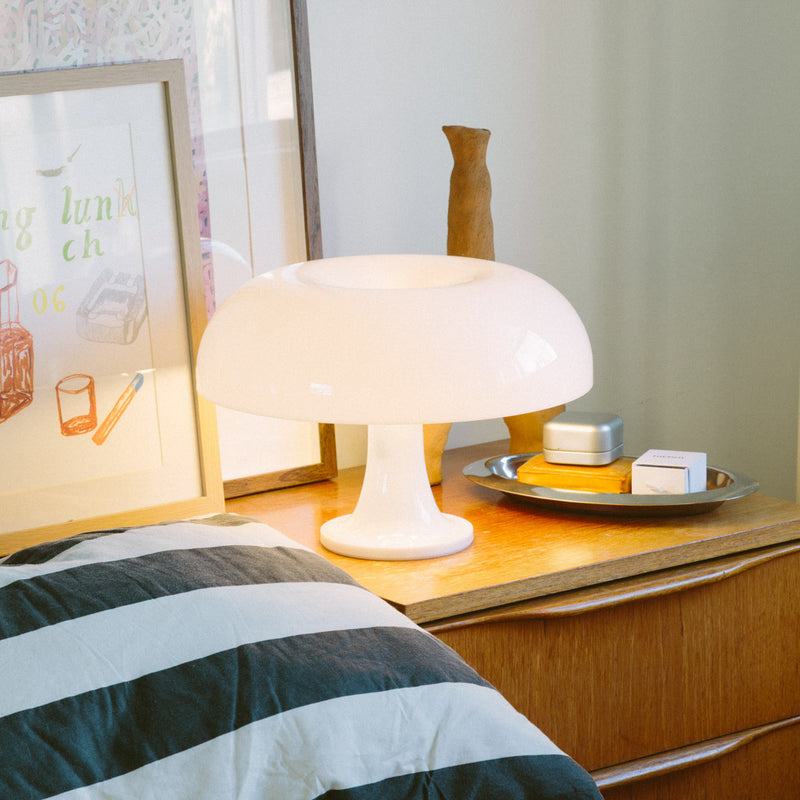
Walk into a japandi room after dark and nothing is trying too hard. Matte surfaces. Materials that age well. The ceiling light off, and nobody reaching for the switch.

That's the idea. Japandi takes the quiet from Japanese minimalism and wabi-sabi, the cosy from Scandinavian design, and lets them get along. Washi paper, timber, linen. Soft shapes that know when to stop. Warm, low light instead of a flat blast from above.

A room that feels calm without looking empty.

Bold Lighting and Unique HomewaresBold Lighting and Unique HomewaresBold Lighting and Unique Homewares
The three japandi materials - washi paper, linen and timber

STYLE

What is japandi style?

Japandi style is an interior look that pairs Japanese restraint with Scandinavian comfort, drawing on natural materials, muted palettes and clean, functional forms. The Japanese side brings wabi-sabi, the appreciation of imperfect, handmade and naturally aged things. The Scandinavian side brings hygge, and a focus on function and warmth. What you get is a pared-back room that still feels grounded and tactile rather than cold.

The word is recent but the pairing is old. Scandinavian designers were drawn to Japanese craft from early last century, valuing exactly what they already prized at home: natural materials, clean lines, and light used gently. Japandi simply put a name on a long overlap.

Bold Lighting and Unique Homewares

THE LAMP

What makes a lamp japandi?

A lamp is japandi when it combines three things: a natural, unlacquered material, a restrained sculptural form, and a warm glow. Washi paper, timber and linen give it texture and warmth. A clean silhouette keeps it calm. A warm globe keeps the light soft. Get the shape right and put a cold, bright globe in it and the room still misses, because the warmth of the light carries as much of the style as the form does.

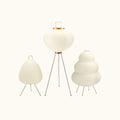
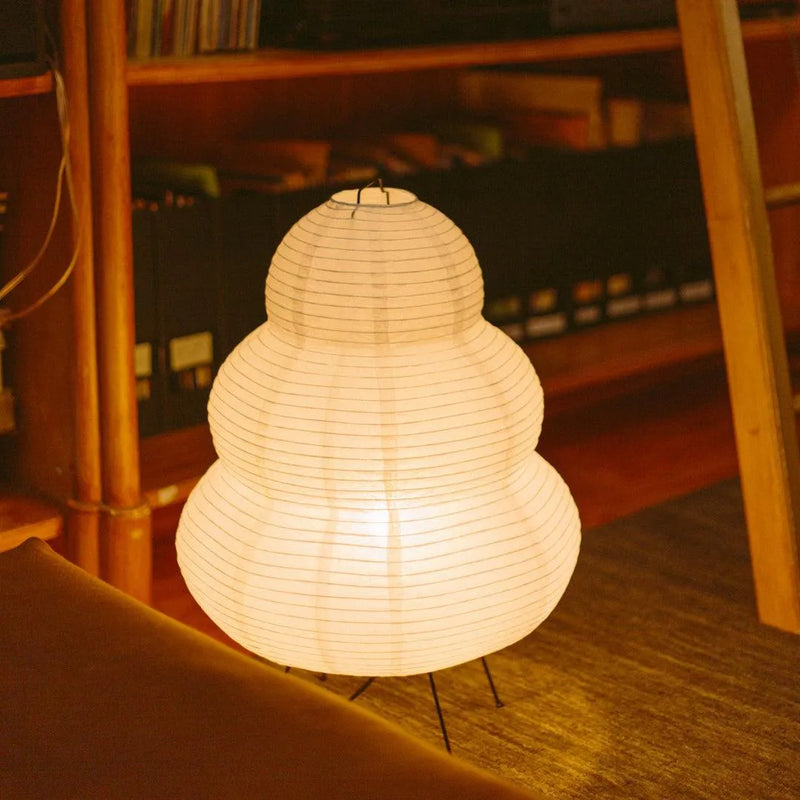
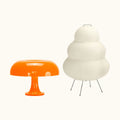
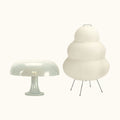
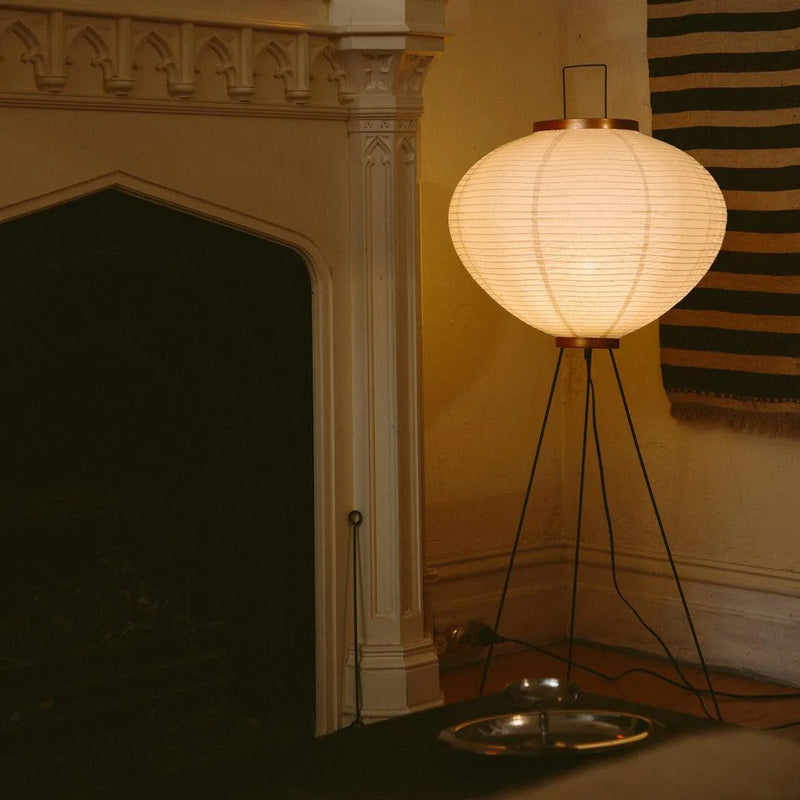
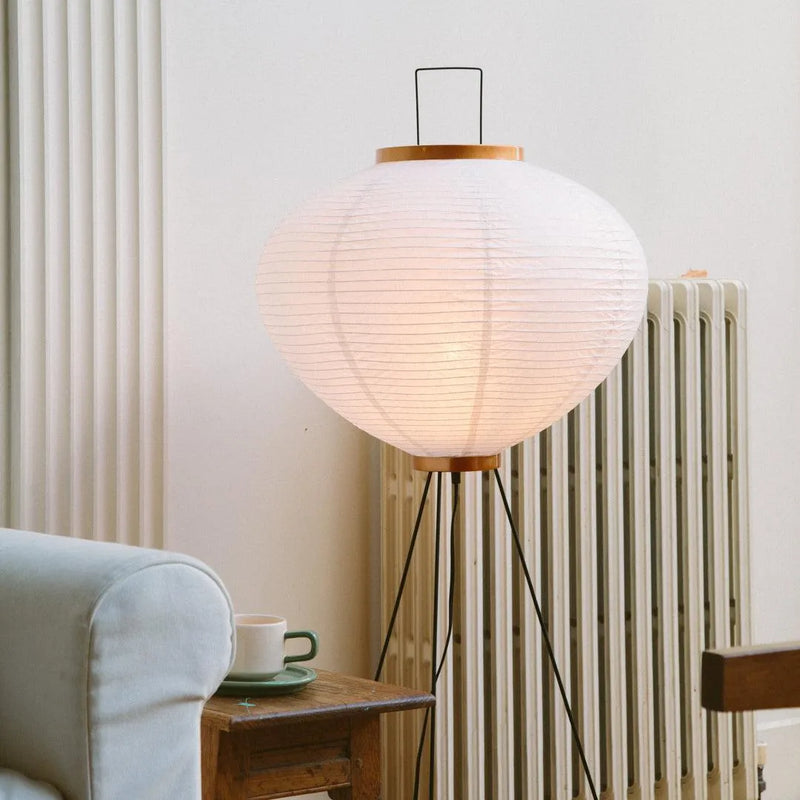
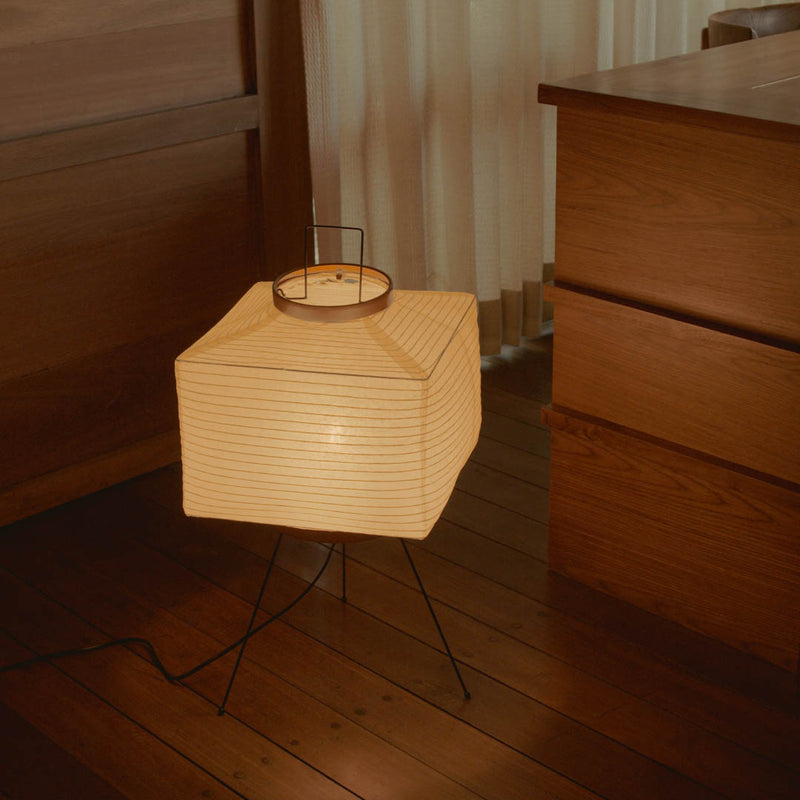
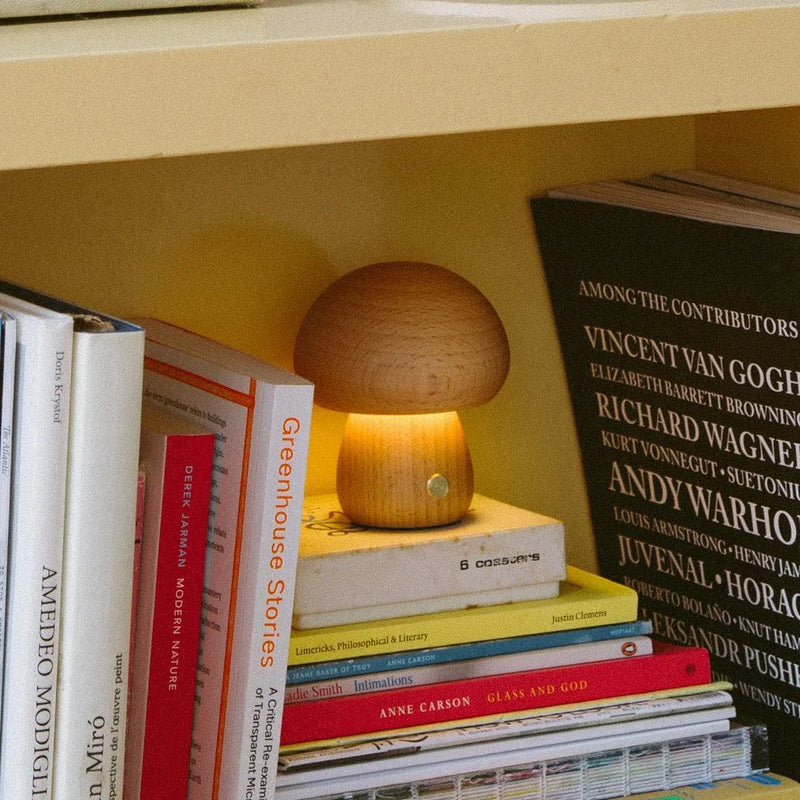
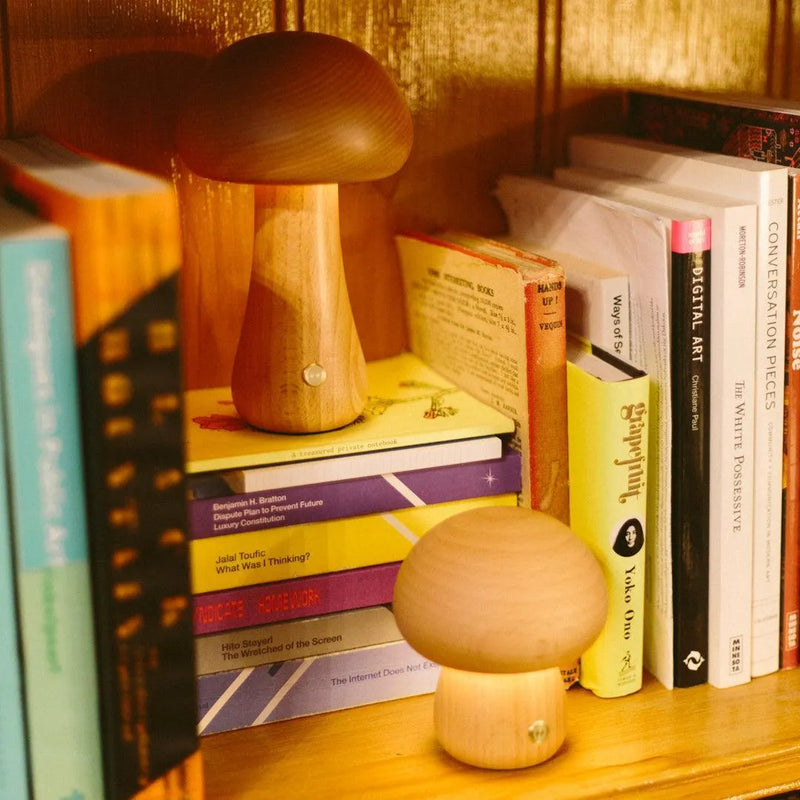
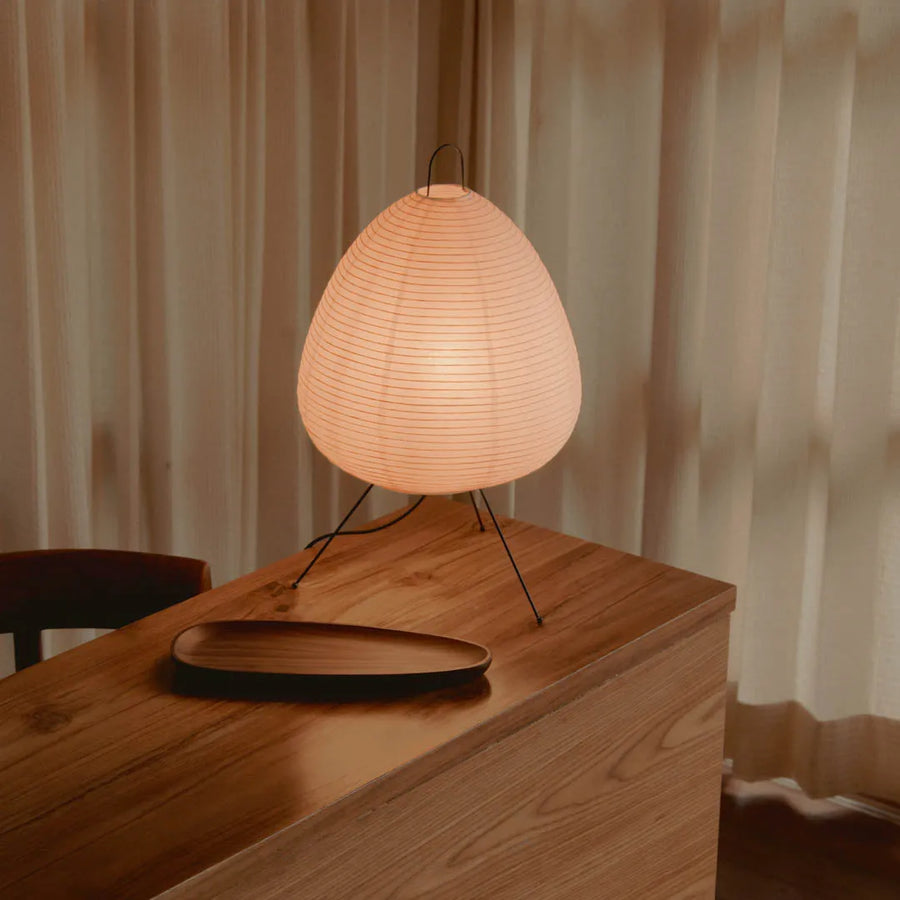
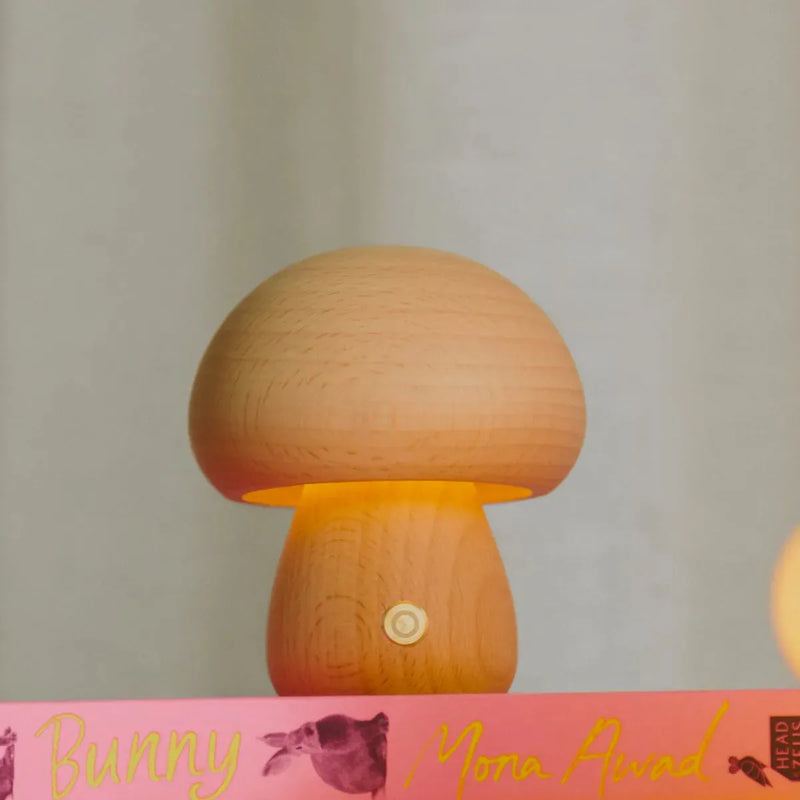
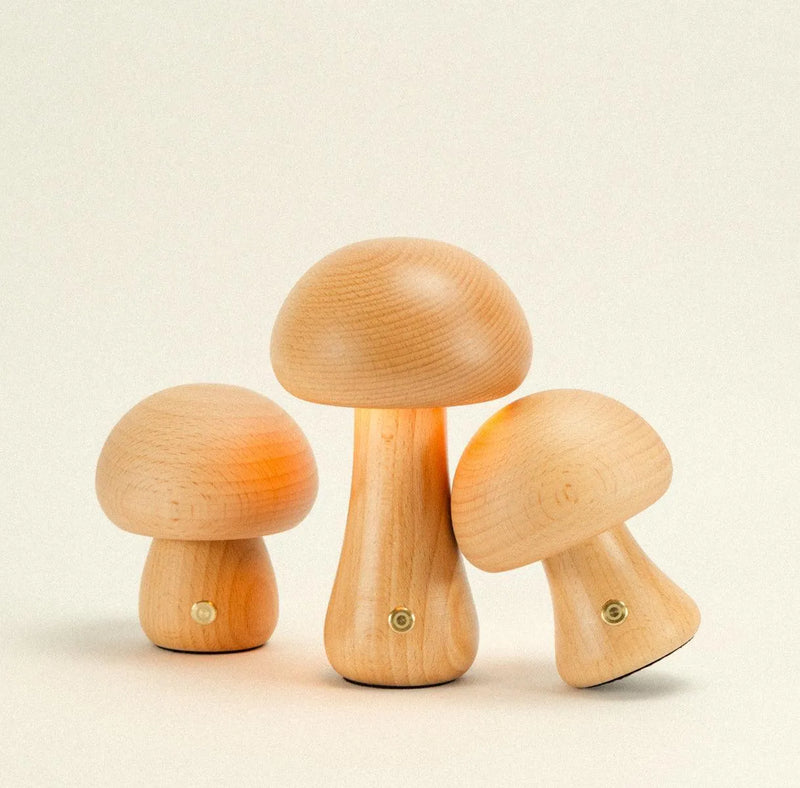
The forms lean organic and quietly sculptural rather than loud. A rice paper shade that lifts evenly all over, a turned timber dome that pools light down onto a shelf, a cotton linen shade that diffuses a soft wash into a room: each reads as a considered object in daylight and a source of warmth after dark. In our range, the stacked, cloud-like form of the rice paper Above the Clouds and the solid turned timber of the Timber Mushie are the two clearest examples of that balance.

WARMTH

What colour temperature suits japandi lighting?

"We should work for simple, good, undecorated things, but things which are in harmony with the human being." Alvar Aalto, Finnish architect The broader design world usually cites the 2700K to 3000K band as japandi warm white, and 2200K simply sits at the warm end of that thinking. Cooler, bluer light reads clinical and works against the calm the whole style depends on, so the rule of thumb is to stay warm and stay consistent across a room.

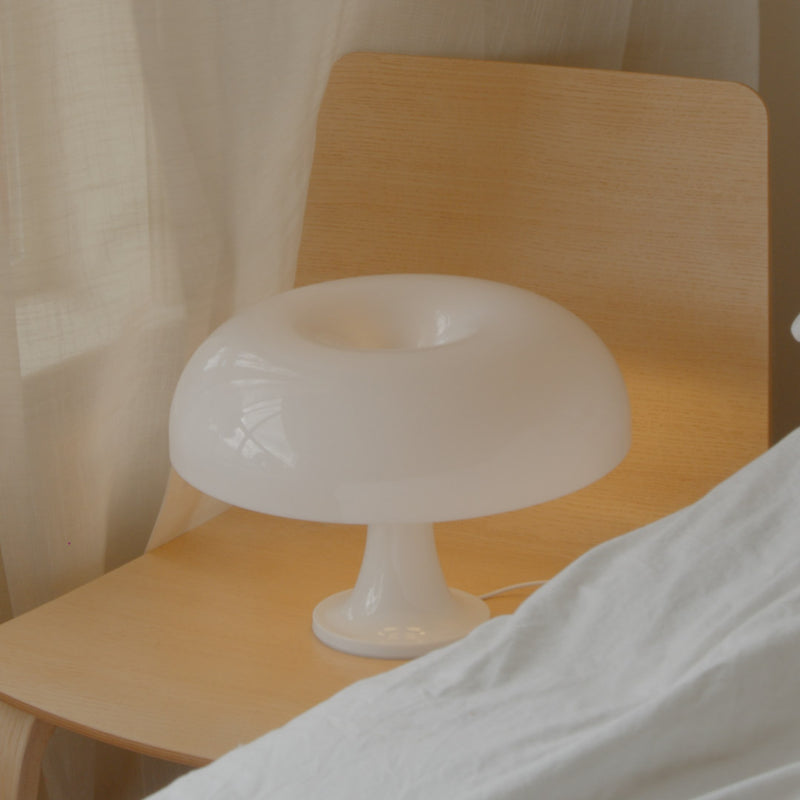
Keeping one colour temperature across the floor, table and portable pieces in a room is what makes it feel cohesive rather than patchy. A few of our pieces vary by design and are worth naming: the moulded-acrylic Puffball runs on 2700K globes, a step up the scale from 2200K, the Timber Mushie runs a warm integrated LED, and the Portable Metal Touch lets you shift warm to cool by touch.

Bold Lighting and Unique Homewares
The blend is older than the name. When Japonisme swept Europe in the 1870s, Scandinavian designers took one look at Japanese craft and never quite let go.
Dennis Did It

MATERIALS

What materials define japandi lamps?

Natural, unlacquered materials define them, chiefly washi paper, timber and linen, which are the three our own range is built from. These carry grain, weave and fibre as part of the design rather than hiding them under gloss or synthetic finish. The material is doing the decorating, which is why the palette stays muted and the surfaces stay matte.

Washi, the handmade Japanese paper traditionally made from mulberry bark, is the signature. Its long fibres make it both translucent and strong, so it scatters light evenly with no hot spot and softens with age rather than wearing out. Timber adds warm, grounded weight and darkens where hands go. Cotton linen diffuses a broader, room-filling wash. Each ages gently, which suits the wabi-sabi heart of the style. Rattan and ceramic belong to the wider japandi look too, but you will not find them here, so if that is the texture you are after, our washi and turned timber pieces are the fair comparison.

Washi - translucent, strong, and softening with age rather than wearing out
NATURAL MATERIALS

Three materials

Washi paper, timber and linen - the honest, unlacquered materials japandi is built from.

3

THE ROOM

How do you light a room the japandi way?

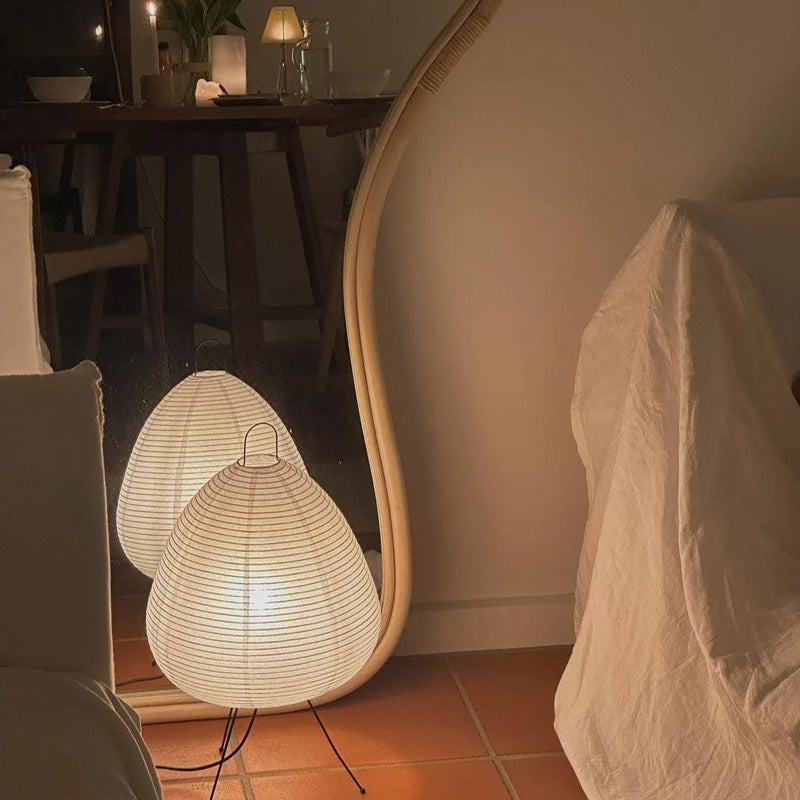
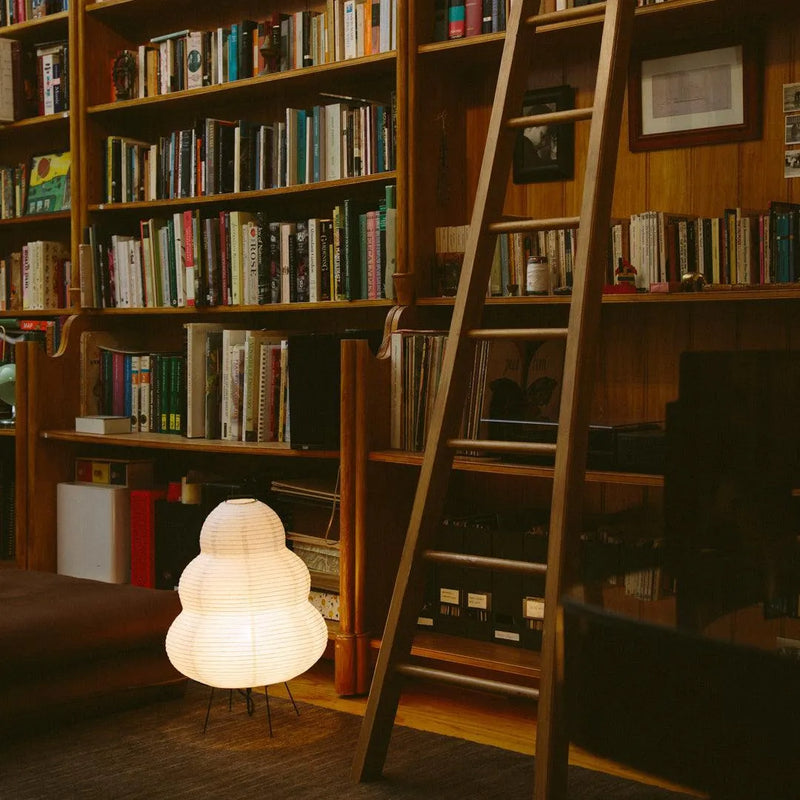
With warm, low, layered light rather than one bright fitting overhead. Instead of leaning on the ceiling light, build the room from a few soft sources at different heights: a floor lamp to anchor a corner, a table or bedside lamp for close warmth, a low cordless piece to finish a shelf or a bench. Three modest sources will always beat one bright one.

A paper pendant hung over a table is the classic japandi image, and it is worth being straight about this: Dennis Did It stocks freestanding table, floor and portable lamps only, and does not sell pendants, ceiling lights, wall lights or anything hard-wired. For a dining table, the honest version of the look is a warm lamp on the sideboard or buffet beside it, or a cordless piece set down on the table itself, which also spares you an electrician.

Restraint matters as much as warmth. One considered sculptural piece does more than a cluster of fittings, and leaving quiet space around it is part of the look. Keep the palette muted, let the materials carry the texture, and let pools of warm light shape the room after dark.

Quick-pick table: japandi lamp by type and use

UseReach forMaterialWhy it works
Anchor a living room cornerBigger Is Better (120cm) or Above the Clouds, both floor-standingWashi paperOmnidirectional diffuse glow fills the whole corner from one point, no beam and no shadow direction
Soft bedside lightAbsolutely Necessary, 28 x 47cmWashi paperA soft even glow with no glare from any angle at arm's length
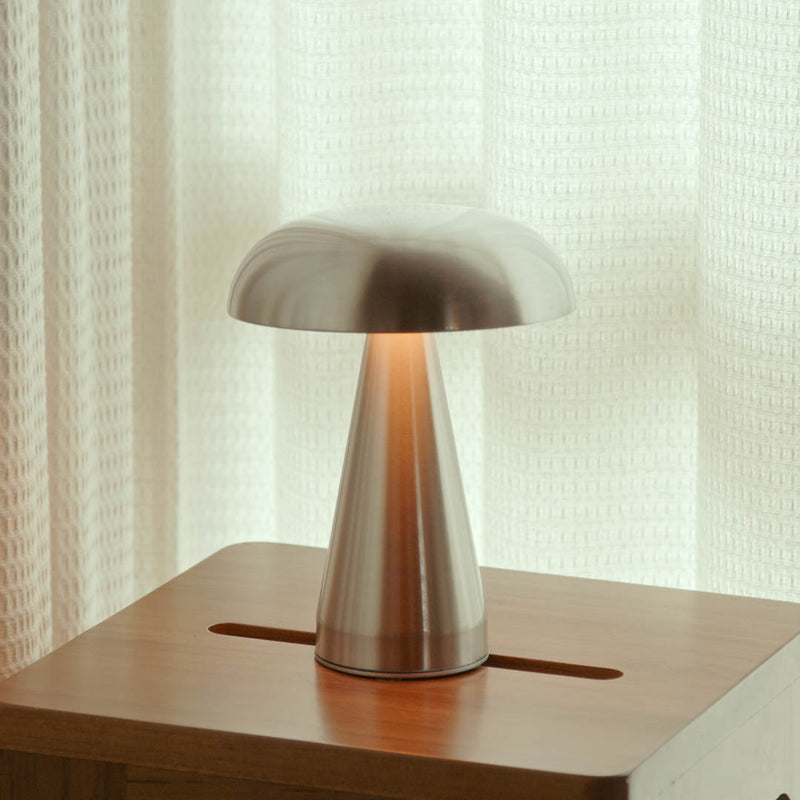
Cordless spot with no power pointTimber Mushie or Portable Metal TouchTurned timber or polished metalRechargeable accent light you can set down anywhere, touch to dim
Near a dining tablePortable Metal Touch on the table, or the cotton-linen Volley on the sideboard beside itPolished metal or cotton linenWarm light at the right height with no ceiling fitting involved; rice paper is a bedroom and living piece, not a dining one
Warmest, calmest glow in the roomAny shade running a 2200K globeAnyLight stays close to candlelight, which is the whole point of the style
Japandi Lamps

Quiet beauty, clean lines.

Shop Japandi Lamps →

The full japandi collection - floor, table and pendant.

japandi floor lamp - rice paper shade timber base - Dennis Did It
BEST SELLER
rice paper floor lamp - natural lantern style - Dennis Did It
Sold OutBEST SELLER
cordless rechargeable lamp - aluminium touch lamp - Dennis Did It
Sold OutBEST SELLER
statement floor lamp - large rice paper lantern - Dennis Did It
-$59.85
acrylic sphere lamp - snow white - Dennis Did It
-$35.80

Puffball Lamp

5.0 (103)

$179.00$143.20 Save $35.80

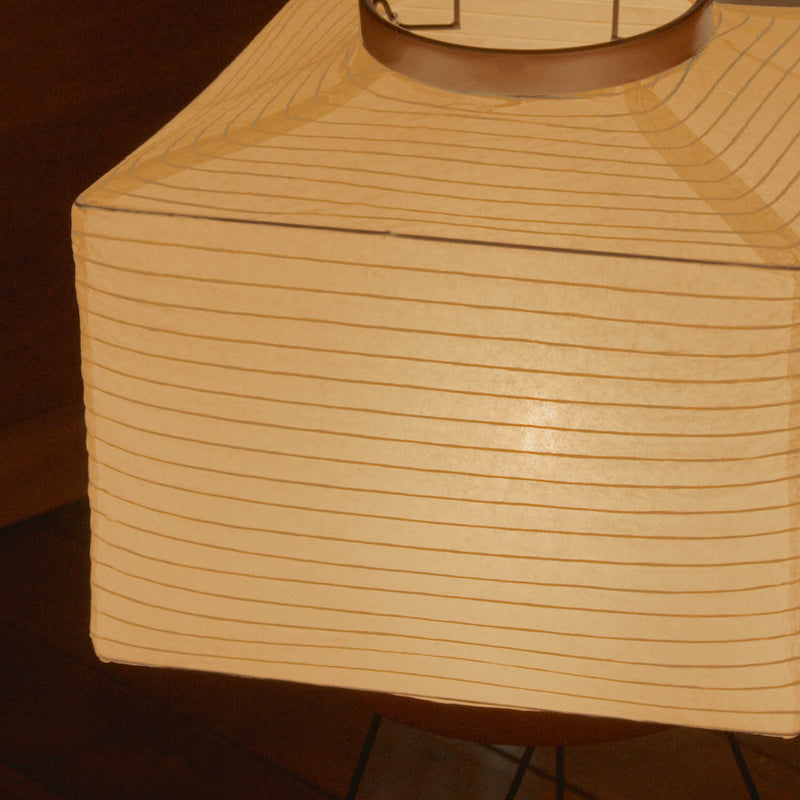
minimalist floor lamp - square rice paper shade - Dennis Did It
-$49.80

Boxy Lamp

4.0 (3)

$249.00$199.20 Save $49.80

wooden mushroom lamp - beech timber base small - Dennis Did It
-$17.25
wooden mushroom lamp - beech timber base regular size - Dennis Did It
-$17.25

Born in Melbourne

Independently owned. Still making every decision from the same kitchen table.

Natural materials

Washi paper, timber and linen. Nothing high-gloss.

Free shipping $100+

Australia-wide. Dispatched within 2 business days.

30-day returns

No fuss. If it's not right, we'll sort it.

Frequently asked questions

What is japandi lighting in simple terms?

Japandi lighting is lighting in the japandi style, which blends Japanese minimalism with Scandinavian warmth. It uses natural materials such as washi paper, timber and linen, soft restrained forms, and a warm, low colour temperature. The point is a calm, uncluttered room built from three or four soft, layered sources rather than one harsh fitting overhead.

Is a japandi lamp the same as a wabi-sabi lamp?

Not quite, though they overlap heavily. Wabi-sabi is the Japanese taste for beauty that is imperfect, impermanent and incomplete, and it is one of the influences feeding japandi. Japandi is the broader style that pairs that feeling with Scandinavian order and warmth, so a japandi lamp tends to look a little more pared back and resolved than a purely wabi-sabi one.

What colour temperature is best for japandi lighting?

A warm white. We run an ultra-warm 2200K house standard, which sits just above candlelight at around 1900K and below a traditional incandescent 2700K. The wider design world often cites 2700K to 3000K as japandi warm white, and 2200K sits at the warm end of that. Cooler, bluer light reads clinical and undercuts the calm the style is built on.
What materials make a lamp japandi?

Natural, unlacquered materials: washi paper, timber and linen above all, with rattan and ceramic at home in the wider look. These keep grain, weave and fibre visible and the palette muted, and they age into a room rather than out of it. High-gloss and synthetic finishes are avoided, because the texture of honest materials is doing most of the work.
Do japandi lamps work in a small Australian apartment?

Yes, and arguably better than in a big room. Soft, low, layered light makes a compact space feel calm rather than cramped, and a single washi table lamp or a slim turned-timber piece adds warmth without taking up much surface. The muted palette keeps things visually quiet, and the cordless pieces solve the classic apartment problem of one power point in the wrong wall.

Where can I buy japandi lamps in Australia?

Browse our [japandi lamps and lighting collection](/collections/japandi-lamps) for floor and table formats in rice paper, timber and glass, with free shipping on orders over $100 Australia-wide. The [best japandi lamps in Australia comparison](/blogs/guides/best-japandi-lamps-australia) ranks the standout pieces by room and use if you would rather start from a shortlist. Everything ships from Melbourne with a 12-month warranty and 30-day returns.

Bigger Is Better Lamp-Dennis Did It
Dennis Did It
Calm, warm, and made to be lived with.
Shop japandi lamps