The Library

How to Choose a Floor Lamp in Australia

A practical Australian guide to choosing a floor lamp by height, room and warmth - with warm rice paper picks and real specs.

Hoist lamp lit on coffee table, warm evening interiorBold Lighting and Unique Homewares

There is a particular corner in most homes that the ceiling light just forgets, and a floor lamp is what finally warms it, glowing low and soft where the room felt a little unfinished. From there, the right floor lamp comes down to three things: how tall it stands, what kind of light it throws, and how it reads in the room when it is switched off. Get those right and a floor lamp fills a corner a ceiling light never reaches, adds warmth at eye level, and works as a piece of furniture in its own right. This guide walks through height, placement, bulbs and colour temperature, materials, plug safety and styling, with worked examples from the warm 2200K rice paper floor lamps we make at Dennis Did It.

If you already know you want the soft, glowing paper-lantern look, start with our floor lamps collection. If you are still weighing your options, read on.
"At 2200K the light reads like late afternoon sun or candlelight, which is what makes a corner feel like evening rather than an office."

What height should a floor lamp be?

Most floor lamps sit between 120cm and 180cm, and the right height depends on the job. Beside a sofa or a reading chair, you want the light near shoulder height when you're seated, roughly 100cm to 140cm, so it lands on the page rather than in your eyes. For a dark corner or a tall room, taller wins.

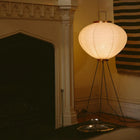
Bigger Is Better is statement-scale at 120cm, built for the corner a table lamp can't reach. Above the Clouds stands 56cm, low enough for beside a chair or up on a surface, for rooms where full height would be too much.

Where should you put a floor lamp in a room?

A floor lamp works best in a corner, beside seating, or framing something you want noticed. Corners are the classic spot, since ceiling lights leave them dark and a tall diffuse lamp fills that gap with soft light instead of a harsh beam. Beside a sofa or armchair, it gives you a warm pool for reading without lighting the whole room.

In open-plan Australian living rooms it also helps zone the space, marking the lounge as separate from the dining or kitchen end. Rice paper is forgiving here, glowing evenly from every side with no hotspot, so it reads as an object rather than a spotlight, and looks considered from every angle.

What is the best bulb and colour temperature for a floor lamp?

For a floor lamp used in living and bedroom spaces, a warm bulb between 2200K and 2700K gives the cosiest result, and we standardise on an ultra-warm 2200K across our rice paper floor lamps. Colour temperature is measured in kelvin: lower numbers are warmer and more golden, higher numbers are cooler and bluer. At 2200K the light reads like late afternoon sun or candlelight, which is what makes a corner feel like evening rather than an office.

Our rice paper floor lamps include a warm LED globe in the box, so you do not have to match one yourself. The paper does the diffusing, which means the globe only has to be warm: drop in a bright cool globe and the paper will still diffuse it, just into a large cold cloud, so the warm globe is what keeps the corner soft. If you want light bright enough to read fine print by, a diffuse paper lamp is better as ambient warmth than as a dedicated task light, and you would pair it with a closer reading lamp.

What materials should you consider for a floor lamp?

Floor lamp materials fall into a few camps, and each gives a different look and quality of light. Washi rice paper over a metal frame, which is what we make, diffuses the bulb into an even, glare-free glow and brings a calm, sculptural, japandi feel. Woven rattan or cane casts patterned shadows and suits coastal or boho rooms. Fabric drum shades give a soft directional wash, while metal and timber bases read more structured and mid-century.

A quick honest note on long-tail shopping terms. If you have been searching for a rattan floor lamp, a tripod floor lamp or an arc floor lamp, those are real styles worth understanding, but they are not what we make. If you want the warm, woven, natural-material feeling a rattan lamp gives, our rice paper floor lamps land in similar territory, soft and textural and warm, with paper instead of cane and a cleaner line. Our paper lanterns do sit on minimal wire tripod and frame supports, so you get the standing, surface-free quality without a heavy metal tripod look.

Are rice paper (paper lantern) floor lamps a good choice?

Rice paper floor lamps are an excellent choice if you want soft, room-filling warmth and a quiet sculptural object rather than a bright, directional reading light. The paper diffuses the globe so the whole lantern glows evenly with no hotspot and no glare from any angle, which is why they suit bedrooms, reading corners and open-plan living edges. They carry the chochin lantern and Akari design lineage, a tradition of washi paper stretched over a frame, which we make as our own homage rather than a replica of any single lamp.

The trade-off is brightness and directionality: a paper lantern fills a space with mood light, it does not throw a focused beam onto a page, so it is ambient first and task light second. Our floor lamps are handcrafted, so the paper carries small variations from piece to piece, which is part of the look.

Quick-pick: Dennis Did It floor lamps

LampTypeSize (W x H)Light behaviourColour tempBest for
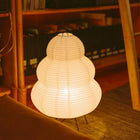
Above the CloudsAbove the CloudsRice paper, double-gourd40cm x 56cmDiffuse, omnidirectional, no hotspot2200K warmFloor or surface beside a chair; the talking-point piece
Bigger Is BetterBigger Is BetterRice paper, balloon floor lamp45cm x 120cmDiffuse, omnidirectional, no hotspot2200K warmA dark corner that needs height and presence
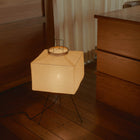
BoxyBoxyRice paper, square floor lamp42cm x 60cmDiffuse, omnidirectional, no hotspot2200K warmAn architectural edge in a room of soft curves

All three include a warm 2200K LED globe, run on a genuine Australian plug, and ship free over $100.

Are Dennis Did It floor lamps safe and made for Australian power?

Yes. Our floor lamps ship with a genuine Australian plug and are built to meet Australian electrical safety requirements, tested to the AS/NZS 60598 luminaire standard, carrying RCM marking and compliant with the Electrical Equipment Safety System (EESS). That means no travel adapters, no rewiring, and a lamp that is legal and safe to plug straight into an Australian wall. Each lamp arrives with a warm LED globe fitted or included and a care guide in the box.

How do you style a floor lamp?

Style a floor lamp by treating it as furniture: give it a clear corner or a spot beside seating, and let its shape do the work rather than crowding it. A tall diffuse lamp like Bigger Is Better wants a little breathing room so the glowing form reads cleanly, while a shorter piece like Above the Clouds pairs well next to a low chair, a stack of books or a console. Keep the warmth consistent across the room, so a 2200K floor lamp sits happily alongside warm table and bedside lamps rather than fighting a cool overhead light.

For a layered, lived-in feel, combine a floor lamp for ambient corner warmth with a smaller table or bedside lamp for task light, so you can switch off the overhead entirely in the evening. Explore the full range in our floor lamps collection, or browse the wider rice paper lamps collection for table-scale versions of the same glow.

Frequently asked questions

What is the best height for a floor lamp?

Between 120cm and 180cm for general use, with the light source near eye level when seated for reading. For lighting a corner or a room with high ceilings, choose a taller lamp around 120cm or more; our Bigger Is Better at 120cm is built for that job.

Are paper lantern floor lamps bright enough to read by?

They are better as ambient warmth than as a dedicated reading light. Rice paper diffuses the globe into a soft, even glow with no hotspot, which fills a corner beautifully but does not throw a focused beam onto a page, so pair one with a closer reading lamp if you read fine print.

Does Dennis Did It sell rattan or arc floor lamps?

No. We make rice paper floor lamps, washi over a metal frame, in warm 2200K. If you want the natural, textural look of rattan, our paper lamps land in similar soft, warm territory with a cleaner line and even, glare-free light.

What colour temperature is best for a floor lamp?

A warm 2200K to 2700K for living and bedroom spaces, and we standardise on ultra-warm 2200K across our rice paper floor lamps. At 2200K the light reads like candlelight or late sun, which is what makes a corner feel calm rather than clinical.

Do your floor lamps come with an Australian plug?

Yes. Every floor lamp ships with a genuine Australian plug and a warm LED globe, built to meet Australian electrical safety requirements (tested to AS/NZS 60598, RCM marked, EESS compliant), so it plugs straight into an Australian wall with no adapter.

Where is the best place to put a floor lamp?

In a dark corner, beside a sofa or reading chair, or framing a console or doorway. Diffuse rice paper lamps are forgiving anywhere because they glow evenly from every side with no hotspot, so they look considered from any angle and help zone an open-plan room.